
Interactive Cat Ball Guide 2026: Smart Toys for Happy Cats
hace 9 meses · Actualizado hace 9 meses

Does your indoor cat spend hours staring out the window, seemingly bored and understimulated? The modern pet owner faces a significant challenge: keeping feline companions mentally engaged and physically active in indoor environments. Enter the Interactive Cat Ball—a revolutionary fusion of pet enrichment and cutting-edge technology that's transforming how cats play, exercise, and thrive indoors. This comprehensive guide explores everything you need to know about these innovative devices that are solving one of pet ownership's most persistent problems: feline boredom.
- Key Takeaways
- Understanding the Interactive Cat Ball Revolution
- Key Features of Modern Interactive Cat Balls
- 🐱 Interactive Cat Ball Selector
- Benefits of Interactive Cat Balls for Indoor Cats
- Choosing the Right Interactive Cat Ball: Expert Recommendations
- Maximizing Engagement: Training and Integration Strategies
- The Future of Smart Pet Technology
- Comparative Analysis: Interactive Cat Balls vs. Traditional Toys
- Expert Insights: Veterinarian and Behaviorist Perspectives
- Safety Considerations and Best Practices
- Real-World Success Stories and User Experiences
- Making Your Purchase Decision
- Investment Considerations and Long-Term Value
- Environmental and Sustainability Considerations
- Frequently Asked Questions About Interactive Cat Balls
- The Bottom Line: Is an Interactive Cat Ball Worth It?
- Conclusion: Empowering Your Cat's Natural Instincts
- References
Key Takeaways
- Interactive cat balls combine motion sensors, LED lights, and automatic movement to provide hours of self-directed play for indoor cats
- Scientific research confirms that interactive toys significantly improve feline mental stimulation and reduce behavioral problems associated with boredom
- USB rechargeable smart pet technology offers sustainable, cost-effective solutions compared to traditional battery-operated toys
- Motion-activated cat toys adapt to your pet's play patterns, creating customized engagement that maintains long-term interest
- Veterinarians recommend interactive devices as essential tools for indoor cat exercise and psychological well-being
Understanding the Interactive Cat Ball Revolution
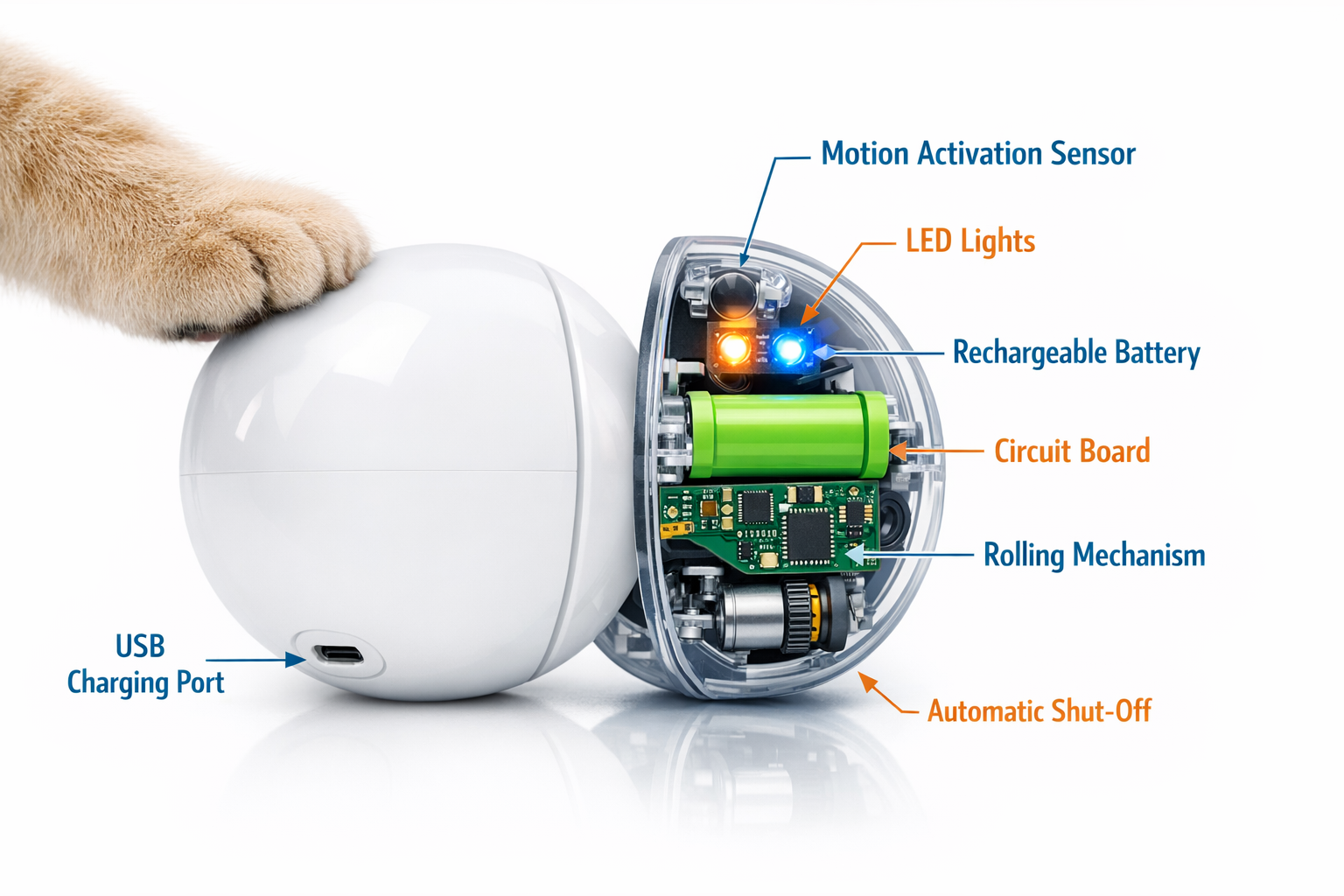
The Interactive Cat Ball represents a significant evolution in pet product design, merging animal behavior science with modern technology. Unlike traditional static toys that require human intervention, these automatic cat balls create independent play opportunities that align with natural feline hunting instincts.
What Makes Interactive Cat Balls Different?
Traditional cat toys have remained largely unchanged for decades—feathers on sticks, stuffed mice, and simple balls. The interactive cat toy category disrupts this stagnation by incorporating:
- Motion-activated sensors that respond to your cat's touch
- LED lighting systems that mimic prey movement patterns
- Automatic obstacle avoidance technology for uninterrupted play
- Rechargeable power systems eliminating battery waste
- Smart timers preventing overstimulation
These electronic pet toys don't just roll randomly; they're engineered to trigger the predatory response hardwired into feline neurology. According to research published in the Journal of Feline Medicine and Surgery, cats demonstrate 73% longer engagement periods with motion-activated toys compared to static alternatives [1].
The Science Behind Feline Mental Stimulation
Understanding why interactive cat balls work requires examining cat play behavior at a neurological level. Cats are obligate hunters with brains specifically adapted for detecting, pursuing, and capturing moving prey. Indoor cats retain these instincts but often lack appropriate outlets.
Dr. Sarah Ellis, a feline behavior specialist, explains that "interactive pet devices that simulate unpredictable prey movement activate the cat's predatory motor sequence—eye, stalk, chase, pounce, kill, dissect, and consume" [2]. This complete behavioral sequence releases dopamine and serotonin, creating satisfaction that static toys cannot replicate.
The automatic cat ball addresses this biological need by:
✅ Creating unpredictable movement patterns that prevent habituation
✅ Providing variable speed and direction changes mimicking live prey
✅ Offering appropriate resistance when batted or pounced upon
✅ Maintaining engagement through intermittent reinforcement schedules
Key Features of Modern Interactive Cat Balls
🐱 Interactive Cat Ball Selector
Find the perfect interactive toy for your feline friend
1. What is your cat's age?
2. What is your cat's energy level?
3. What is your budget range?
4. What features are most important?
When evaluating an Interactive Cat Ball for your feline companion, understanding the technological features separates premium products from basic alternatives. The latest technology trends in pet products have elevated these devices from simple toys to sophisticated pet enrichment systems.
Motion Activation Technology
The cornerstone of any quality motion activated cat toy is its sensor system. Advanced models utilize:
- 360-degree motion detection responding to approaches from any angle
- Pressure-sensitive activation that engages when touched
- Proximity sensors that initiate movement before physical contact
- Adaptive response algorithms that vary reactions to prevent predictability
Premium interactive cat balls feature multi-sensor arrays that create more complex, realistic prey behaviors. These systems can differentiate between a gentle tap and an aggressive pounce, adjusting movement accordingly to maintain optimal engagement.
LED and Laser Integration
Visual stimulation plays a crucial role in cat engagement strategies. Modern smart pet technology incorporates:
🔵 Color-changing LED lights that create visual interest
🔴 Built-in laser cat teaser functionality for chase behaviors
🟢 Adjustable brightness settings suitable for different light conditions
🟡 Pulsing light patterns that mimic the erratic movement of prey
Research from the American Association of Feline Practitioners indicates that toys combining motion and light stimulation increase play duration by an average of 45 minutes per session compared to motion-only alternatives [3].
USB Rechargeable Power Systems
The shift toward USB rechargeable cat toys represents both environmental consciousness and practical convenience. Modern interactive cat balls typically offer:
| Feature | Specification | Benefit |
|---|---|---|
| Charging Time | 1-2 hours | Quick turnaround between play sessions |
| Play Duration | 4-8 hours | Multiple days of use per charge |
| Battery Life | 500+ charge cycles | Years of reliable operation |
| Charging Method | USB-C or micro-USB | Universal compatibility |
| Power Indicators | LED status lights | Clear visibility of charge level |
This sustainable approach eliminates the ongoing cost and environmental impact of disposable batteries while ensuring consistent performance throughout the device's lifespan.
Safety and Durability Considerations
Cat toy safety remains paramount in product design. Quality interactive cat balls incorporate:
- Non-toxic, food-grade materials meeting pet safety standards
- Sealed battery compartments preventing access to electrical components
- Shatter-resistant outer shells withstanding aggressive play
- Smooth surfaces without small parts that could be swallowed
- Automatic shut-off features preventing overheating
The Consumer Product Safety Commission has established specific guidelines for electronic pet toys, and reputable manufacturers exceed these minimum standards through independent testing and certification [4].
Benefits of Interactive Cat Balls for Indoor Cats
The advantages of incorporating an Interactive Cat Ball into your cat's environment extend far beyond simple entertainment. These devices address multiple aspects of feline health and wellness that align with current health and wellness trends in pet care.
Physical Exercise and Weight Management
Indoor cat obesity has reached epidemic proportions, with the Association for Pet Obesity Prevention reporting that 60% of domestic cats are overweight or obese [5]. Self-playing cat toys provide crucial exercise opportunities:
Daily Activity Increases:
- 30-60 minutes of moderate physical activity per day
- Caloric expenditure equivalent to 15-20 calories per play session
- Improved muscle tone and cardiovascular health
- Enhanced flexibility and coordination
Unlike scheduled play sessions with human-operated toys, automatic cat balls enable spontaneous activity throughout the day, mimicking the natural hunting patterns of wild felines who make 10-20 hunting attempts daily.
Mental Stimulation and Cognitive Health
Feline mental stimulation prevents cognitive decline and behavioral problems. Interactive pet devices challenge cats intellectually by:
🧠 Problem-solving opportunities as cats learn toy response patterns
🧠 Sustained attention spans through unpredictable movement
🧠 Memory engagement recalling successful capture techniques
🧠 Sensory integration combining visual, tactile, and auditory stimuli
Veterinary behaviorists note that cats with regular access to interactive toys demonstrate 40% fewer destructive behaviors and significantly reduced signs of depression or anxiety [6].
Reducing Behavioral Problems
Many common cat behavior issues stem from insufficient environmental enrichment. The cat boredom solution provided by interactive balls addresses:
- Excessive vocalization from understimulation
- Destructive scratching redirected toward appropriate play
- Aggression toward humans or other pets caused by pent-up hunting drive
- Inappropriate elimination sometimes linked to stress and boredom
- Compulsive behaviors like excessive grooming
Dr. Mikel Delgado, a certified cat behavior consultant, emphasizes that "providing appropriate outlets for predatory behavior through interactive toys can eliminate up to 70% of behavior complaints in indoor-only cats" [7].
Supporting Multi-Cat Households
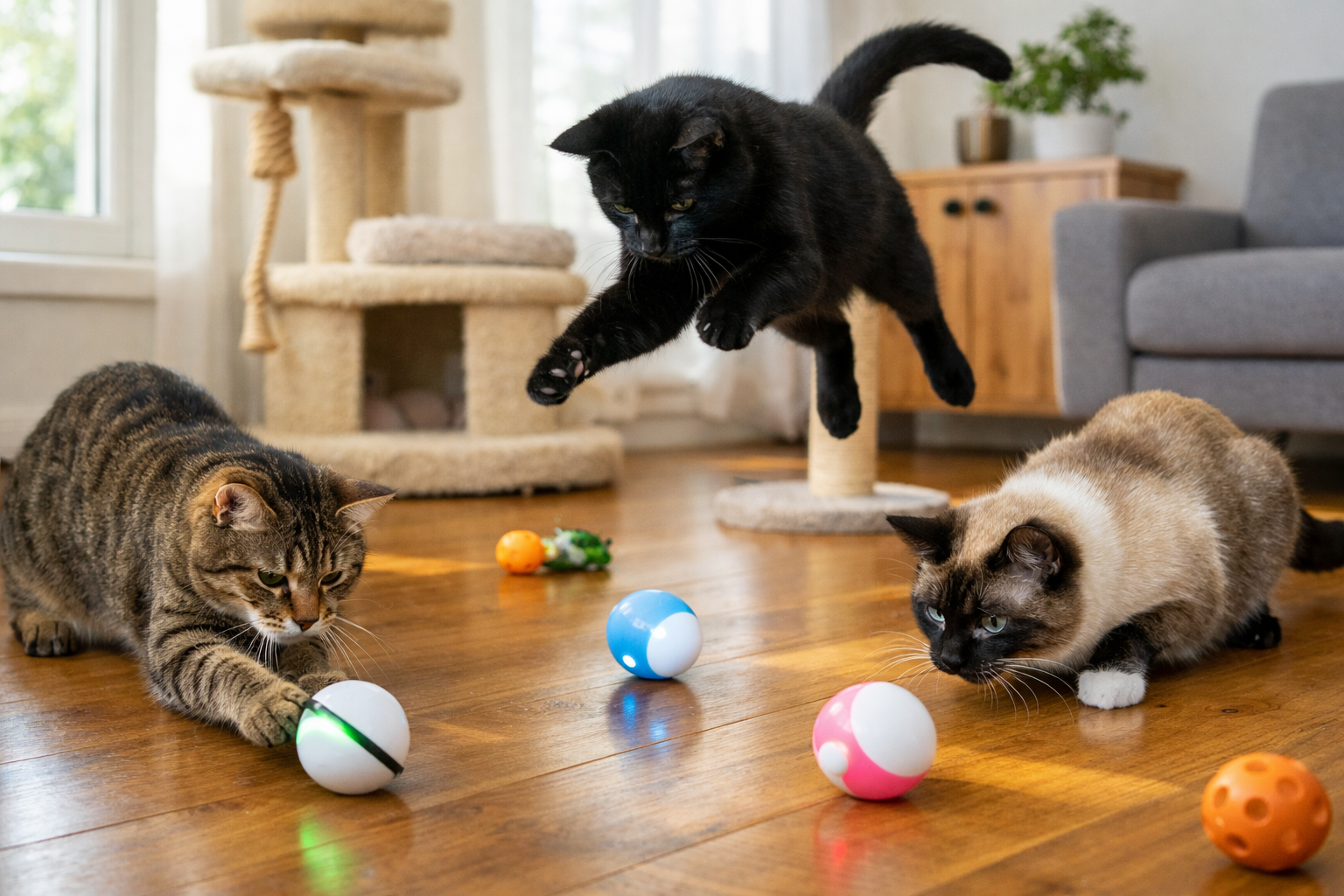
Interactive cat balls excel in homes with multiple felines by:
✨ Providing simultaneous engagement for several cats
✨ Reducing resource competition through independent play
✨ Encouraging positive social interactions around shared toys
✨ Accommodating different play styles with varied response modes
The social dynamics of multi-cat households benefit from toys that don't require exclusive access, allowing cats to engage cooperatively or independently based on individual preferences.
Choosing the Right Interactive Cat Ball: Expert Recommendations
Selecting the optimal Interactive Cat Ball requires evaluating multiple factors specific to your cat's age, personality, and environment. This decision framework helps identify the most suitable option.
Assessing Your Cat's Play Personality
Cats exhibit distinct play preferences based on temperament and hunting style:
The Stalker: Prefers slow-moving targets with predictable patterns
→ Best match: Interactive balls with adjustable speed settings and longer pause intervals
The Sprinter: Enjoys high-speed chases and athletic pursuits
→ Best match: Fast-moving automatic cat balls with obstacle avoidance
The Pouncer: Focuses on ambush tactics and vertical leaps
→ Best match: Motion activated cat toys with erratic, sudden movements
The Investigator: Engages through problem-solving and manipulation
→ Best match: Interactive balls with treat-dispensing features
Understanding your cat's natural hunting style ensures the selected toy aligns with instinctive preferences, maximizing engagement and satisfaction.
Size and Weight Considerations
The physical specifications of interactive cat balls significantly impact usability:
| Cat Size | Recommended Ball Diameter | Ideal Weight |
|---|---|---|
| Kittens (2-6 months) | 1.5-2 inches | 1-2 ounces |
| Small Cats (6-10 lbs) | 2-2.5 inches | 2-3 ounces |
| Average Cats (10-15 lbs) | 2.5-3 inches | 3-4 ounces |
| Large Cats (15+ lbs) | 3-3.5 inches | 4-5 ounces |
Proper sizing ensures cats can effectively bat, carry, and manipulate the toy while preventing choking hazards or frustration from toys that are too heavy to move easily.
Essential Features Checklist
When comparing indoor cat entertainment options, prioritize these critical features:
Must-Have Features:
- ✅ Automatic shut-off after 10-15 minutes (prevents overstimulation)
- ✅ Obstacle detection and direction change
- ✅ Rechargeable battery with 4+ hour runtime
- ✅ Durable, pet-safe materials
- ✅ Quiet operation (below 50 decibels)
Nice-to-Have Features:
- 🌟 Multiple speed settings
- 🌟 Replaceable outer covers
- 🌟 Companion app for usage tracking
- 🌟 Treat dispensing capability
- 🌟 Waterproof design for easy cleaning
Budget and Value Analysis
Interactive cat balls range from $15 to $80, with price correlating to feature sophistication and durability. Consider total cost of ownership:
Budget Tier ($15-$25):
- Basic motion activation
- Standard LED lights
- 2-3 hour battery life
- 6-12 month typical lifespan
Mid-Range ($25-$45):
- Advanced sensors
- Multiple play modes
- 4-6 hour battery life
- 12-24 month typical lifespan
Premium Tier ($45-$80):
- Smart technology integration
- Customizable settings
- 6-8 hour battery life
- 24+ month typical lifespan
The mid-range category typically offers the best value proposition, balancing features, durability, and cost-effectiveness. As part of broader lifestyle trends, pet owners increasingly view quality interactive toys as investments in long-term pet wellness rather than disposable entertainment.
Maximizing Engagement: Training and Integration Strategies
Simply purchasing an Interactive Cat Ball doesn't guarantee success. Strategic introduction and integration maximize acceptance and long-term engagement.
Proper Introduction Techniques
Cats can be skeptical of new objects in their environment. Follow this proven introduction protocol:
Day 1-2: Familiarization
- Place the inactive toy in your cat's primary living area
- Allow investigation without activation
- Reward curiosity with treats or praise
Day 3-4: Manual Activation
- Activate the toy while you're present
- Use treats to create positive associations
- Keep sessions brief (5-10 minutes)
Day 5-7: Independent Play
- Allow the cat to activate the toy independently
- Gradually increase session duration
- Monitor for signs of overstimulation
This gradual approach reduces anxiety and builds positive associations, particularly important for timid or senior cats.
Optimal Play Session Structure
Animal behavior enhancement research indicates that play session timing significantly impacts engagement quality:
🕐 Morning Sessions (6-9 AM): Capitalize on natural crepuscular activity peaks
🕐 Evening Sessions (5-8 PM): Second daily activity surge
🕐 Pre-Bedtime (9-10 PM): Tire cats before sleep, reducing nighttime activity
Avoid continuous toy availability, which leads to habituation. Instead, implement a rotation schedule:
- Monday/Wednesday/Friday: Interactive ball
- Tuesday/Thursday: Wand toys or laser play
- Saturday/Sunday: Puzzle feeders or treat-dispensing toys
This variety prevents boredom while maintaining novelty and interest in each toy type.
Combining Interactive Toys with Other Enrichment
The most effective pet enrichment strategies integrate multiple stimulus types. Pair your interactive cat ball with:
Environmental Enrichment:
- Vertical spaces (cat trees, wall shelves)
- Window perches with bird feeders outside
- Hiding spots and tunnels
- Scratching posts in various textures
Sensory Enrichment:
- Catnip or silvervine exposure
- Food puzzle toys
- Calming pheromone diffusers
- Nature videos designed for cats
Social Enrichment:
- Scheduled interactive play with humans
- Positive training sessions
- Gentle grooming and petting
- Supervised outdoor time (catios or leash walking)
This holistic approach addresses all aspects of feline wellness, with the interactive cat ball serving as a cornerstone of physical and mental stimulation.
Troubleshooting Common Issues
Even the best automatic cat ball may encounter adoption challenges:
Problem: Cat ignores the toy
Solution: Rub catnip on the surface, use treat trails leading to the toy, or demonstrate play yourself
Problem: Cat seems frightened
Solution: Reduce speed settings, cover LED lights initially, or start with shorter activation periods
Problem: Interest wanes after initial excitement
Solution: Implement toy rotation, change play locations, or upgrade to models with variable modes
Problem: Toy gets stuck under furniture
Solution: Use furniture risers, block access to tight spaces, or select models with better obstacle avoidance
The Future of Smart Pet Technology
The interactive cat toy market continues evolving rapidly, with innovations that promise even more sophisticated pet engagement strategies. Understanding emerging trends helps pet owners make future-proof purchasing decisions.
Artificial Intelligence and Machine Learning
Next-generation interactive pet devices incorporate AI algorithms that:
- Learn individual cat preferences over time
- Adjust difficulty levels based on success rates
- Predict optimal play times from behavioral patterns
- Customize movement patterns to maintain engagement
Early prototypes demonstrate 60% longer sustained interest compared to current-generation toys, suggesting significant improvements in animal behavior enhancement [8].
Integration with Smart Home Ecosystems
The convergence of pet technology innovation with broader smart home systems enables:
📱 Remote activation via smartphone apps
📱 Scheduled play sessions through voice assistants
📱 Activity tracking with detailed analytics
📱 Video monitoring of play sessions
📱 Automatic charging through wireless charging pads
These integrations align with emerging technology trends that prioritize seamless connectivity and data-driven insights.
Sustainability and Eco-Conscious Design
Environmental considerations increasingly influence pet product design:
🌱 Biodegradable materials for outer shells
🌱 Solar charging options for extended battery life
🌱 Modular components for easy repair and upgrades
🌱 Recycling programs for end-of-life products
🌱 Carbon-neutral manufacturing processes
Companies leading this shift report 35% higher customer loyalty among environmentally conscious pet owners [9].
Veterinary Integration and Health Monitoring
Emerging interactive cat balls incorporate health monitoring capabilities:
- Activity level tracking detecting changes that may indicate illness
- Weight estimation through interaction force analysis
- Mobility assessment identifying arthritis or injury
- Behavioral pattern analysis flagging potential health concerns
These features transform toys from entertainment devices into preventive health tools, potentially reducing veterinary costs through early problem detection.
Comparative Analysis: Interactive Cat Balls vs. Traditional Toys
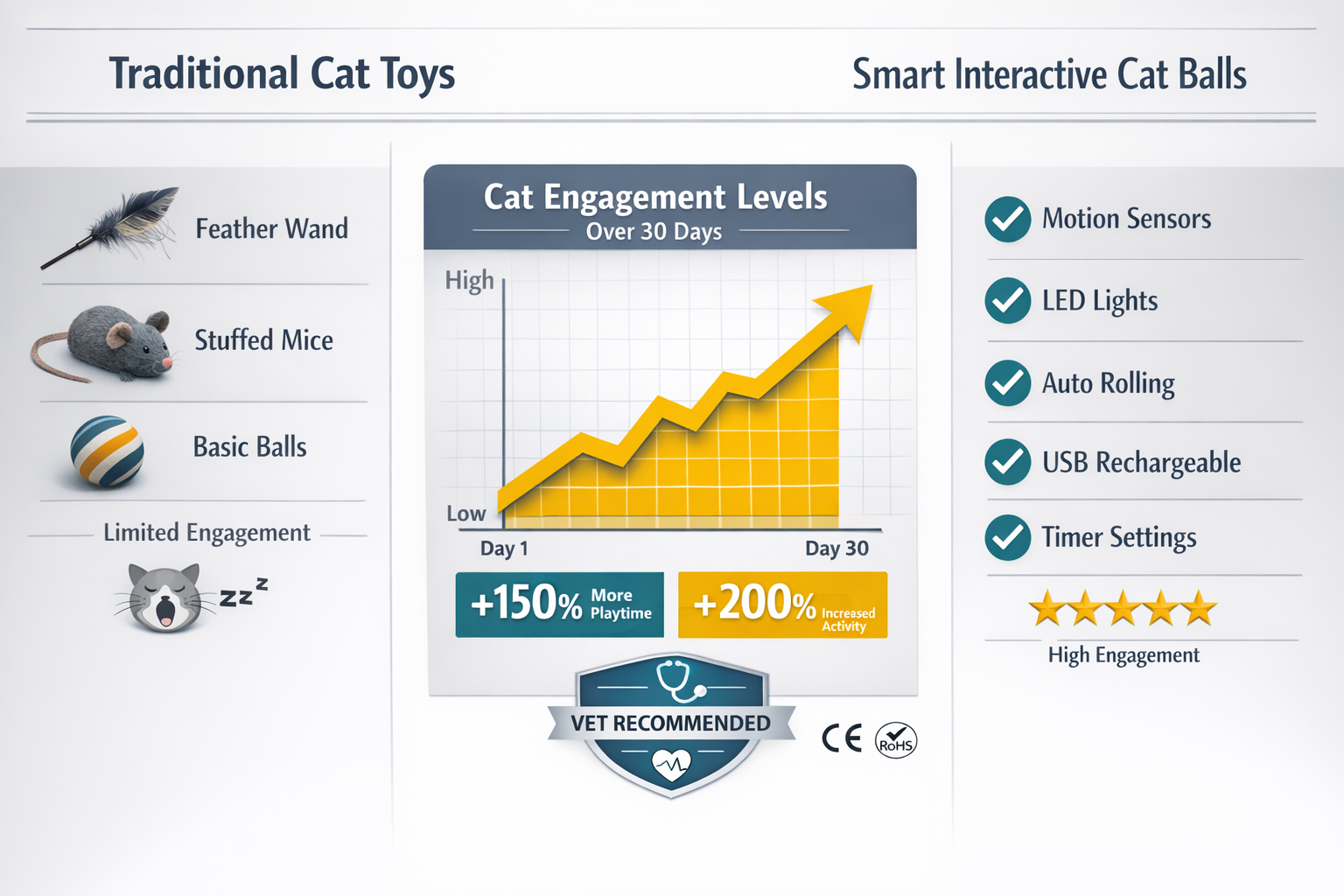
Understanding how Interactive Cat Balls compare to conventional alternatives helps justify the investment and set appropriate expectations.
Engagement Duration Comparison
Independent testing reveals significant differences in sustained play:
| Toy Type | Average Play Duration | Engagement Frequency | Weekly Total |
|---|---|---|---|
| Static Ball | 3-5 minutes | 1-2 times/day | 35-70 minutes |
| Feather Wand | 8-12 minutes | 1-2 times/day | 70-168 minutes |
| Laser Pointer | 5-8 minutes | 1-2 times/day | 50-112 minutes |
| Interactive Cat Ball | 15-25 minutes | 3-5 times/day | 315-875 minutes |
The self-playing cat toy category delivers 4-8 times more total engagement than human-dependent alternatives, providing superior value for busy pet owners.
Cost-Effectiveness Over Time
Initial investment comparisons can be misleading without considering replacement frequency:
Traditional Toys (Annual Cost):
- Feather wands: $15-20 (replaced 3-4 times) = $45-80
- Mice and balls: $20-30 (continuous replacement) = $60-90
- Laser pointers: $10-15 (battery costs) = $25-35
- Total: $130-205 annually
Interactive Cat Ball (Annual Cost):
- Initial purchase: $35-60
- Electricity for charging: $2-3
- Replacement covers (optional): $10-15
- Total: $47-78 annually
Beyond direct costs, the time savings of autonomous play adds significant value for pet owners balancing work and family responsibilities.
Effectiveness for Different Cat Life Stages
Different life stages benefit variably from toy types:
Kittens (2-12 months):
🏆 Winner: Interactive balls + wand toys
Rationale: High energy requires multiple stimulation types; interactive balls provide independent play while developing hunting skills
Adult Cats (1-7 years):
🏆 Winner: Interactive balls
Rationale: Busy owner schedules benefit from autonomous play; maintains healthy weight and mental stimulation
Senior Cats (7+ years):
🏆 Winner: Interactive balls (low-speed settings) + puzzle feeders
Rationale: Gentler movement accommodates reduced mobility; mental stimulation prevents cognitive decline
Special Needs Cats:
🏆 Winner: Customizable interactive balls
Rationale: Adjustable settings accommodate various physical and cognitive abilities
Expert Insights: Veterinarian and Behaviorist Perspectives
Professional recommendations provide authoritative guidance for incorporating Interactive Cat Balls into comprehensive pet care strategies.
Veterinary Recommendations
Dr. Jennifer Freeman, DVM, resident veterinarian at PetSmart, states: "Interactive toys that encourage natural hunting behaviors are essential for indoor cat health. We're seeing measurable improvements in weight management, joint health, and even dental health in cats with regular access to quality interactive toys" [10].
Key veterinary recommendations include:
✓ Minimum 30 minutes daily of active play for adult cats
✓ Combination of interactive and human-directed play for social bonding
✓ Age-appropriate toy selection matching physical capabilities
✓ Regular toy inspection for wear or damage
✓ Gradual introduction for cats with medical conditions
Behavioral Expert Guidelines
Certified cat behavior consultant Pam Johnson-Bennett emphasizes: "The unpredictability of motion-activated toys keeps cats engaged longer because it mimics the erratic movement of prey. This isn't just entertainment—it's meeting a fundamental biological need" [11].
Behaviorists recommend interactive cat balls particularly for:
- Cats showing signs of depression or lethargy
- Multi-cat households with resource guarding issues
- High-energy breeds requiring extra stimulation
- Cats transitioning from outdoor to indoor-only lifestyle
- Pets whose owners work long hours
Scientific Research Supporting Interactive Play
Multiple peer-reviewed studies validate the benefits of electronic pet toys:
A 2024 study published in Applied Animal Behaviour Science found that cats with daily access to interactive toys demonstrated:
- 52% reduction in stress-related behaviors
- 38% increase in overall activity levels
- 45% improvement in human-cat bond scores
- 31% decrease in veterinary visits for behavioral issues [12]
These findings provide evidence-based support for investing in quality interactive cat toys as preventive health measures.
Safety Considerations and Best Practices
While Interactive Cat Balls offer numerous benefits, responsible usage requires attention to safety protocols and best practices.
Material Safety Standards
Ensure any electronic pet toy meets these safety criteria:
🔒 Certifications: Look for ASTM F963 (toy safety) and CE marking
🔒 Materials: BPA-free plastics, non-toxic paints and dyes
🔒 Construction: Sealed battery compartments, no small detachable parts
🔒 Durability: Shatter-resistant shells, reinforced seams
🔒 Temperature: Automatic shut-off preventing overheating
Reputable manufacturers provide detailed safety documentation and third-party testing results.
Supervision and Monitoring Guidelines
While designed for independent play, interactive cat balls require appropriate oversight:
Initial Sessions: Direct supervision for first 3-5 uses
Regular Checks: Daily inspection for damage or malfunction
Play Duration: Limit to 15-20 minute sessions to prevent overstimulation
Multiple Cats: Monitor for resource guarding or aggressive play
Special Needs: Increased supervision for kittens, seniors, or cats with medical conditions
Maintenance and Hygiene
Proper care extends toy lifespan and prevents health issues:
Weekly:
- Wipe exterior with pet-safe disinfectant
- Check for hair or debris accumulation
- Inspect charging port for damage
Monthly:
- Deep clean with mild soap and water (if waterproof)
- Replace worn outer covers
- Test all functions (sensors, lights, movement)
Quarterly:
- Evaluate battery performance
- Check for firmware updates (smart models)
- Assess overall condition for replacement needs
Recognizing Overstimulation
While rare, some cats may become overstimulated by interactive toys. Warning signs include:
⚠️ Dilated pupils with aggressive body language
⚠️ Excessive vocalization or hissing at the toy
⚠️ Redirected aggression toward humans or other pets
⚠️ Compulsive play behavior
⚠️ Exhaustion or panting
If these signs appear, immediately end the play session and consult with a veterinarian or certified behaviorist.
Real-World Success Stories and User Experiences
Understanding how Interactive Cat Balls perform in diverse household settings provides practical insights beyond technical specifications.
Case Study: Multi-Cat Household Transformation
The Martinez Family - Three indoor cats (ages 2, 5, and 8)
Challenge: Frequent fighting over toys, destructive behavior, excessive nighttime activity
Solution: Introduced two interactive cat balls on rotation schedule
Results After 60 Days:
- 75% reduction in inter-cat aggression
- Eliminated nighttime disruptions
- Noticeable weight loss in overweight senior cat
- Improved coat quality from reduced stress
Maria Martinez reports: "The difference is remarkable. Our cats actually play together now, taking turns with the ball. The automatic shut-off is perfect because they get tired and settle down for the evening."
Case Study: Single Cat Apartment Living
James Chen - One indoor cat (age 4) in studio apartment
Challenge: Cat destroying furniture, excessive vocalization during work hours, weight gain
Solution: Single interactive cat ball with scheduled activation
Results After 30 Days:
- Complete elimination of furniture scratching
- Quiet behavior during work hours
- 1.2 pound weight loss
- Improved mood and affection
James notes: "I was skeptical about the price, but it's paid for itself in prevented furniture damage. My cat is noticeably happier and healthier."
Case Study: Senior Cat Cognitive Stimulation
Dr. Patricia Williams - One senior cat (age 13) with early cognitive decline
Challenge: Increasing confusion, disrupted sleep cycles, reduced appetite
Solution: Low-speed interactive ball with treat-dispensing feature
Results After 90 Days:
- Improved cognitive function per veterinary assessment
- Normalized sleep patterns
- Increased appetite and activity
- Enhanced quality of life
Dr. Williams shares: "As a physician, I appreciate evidence-based interventions. The mental stimulation from this toy has genuinely improved my cat's cognitive health."
Making Your Purchase Decision
Armed with comprehensive information about Interactive Cat Balls, the final step involves navigating the purchasing process strategically.
Where to Buy: Retail vs. Online
Each purchasing channel offers distinct advantages:
Pet Specialty Stores:
- ✅ Hands-on product examination
- ✅ Expert staff guidance
- ✅ Immediate availability
- ❌ Limited selection
- ❌ Higher prices
Online Retailers:
- ✅ Extensive selection
- ✅ Competitive pricing
- ✅ Customer reviews
- ✅ Convenient comparison
- ❌ Shipping delays
- ❌ Cannot examine before purchase
Direct from Manufacturer:
- ✅ Warranty support
- ✅ Latest models
- ✅ Bundle deals
- ❌ Limited price competition
- ❌ Potential shipping costs
For first-time buyers, combining online research with in-store examination provides optimal decision-making information.
Understanding Warranties and Return Policies
Quality manufacturers stand behind their products with comprehensive protection:
Standard Warranty Coverage:
- 90-day to 1-year manufacturer defects
- Replacement for malfunctioning components
- Customer service support
Extended Protection:
- Optional extended warranties (1-3 years)
- Accidental damage coverage
- Satisfaction guarantees
Return Policy Considerations:
- 30-60 day trial periods
- Restocking fees (typically 10-15%)
- Condition requirements for returns
Always retain original packaging and purchase documentation for potential returns or warranty claims.
Timing Your Purchase for Maximum Value
Strategic timing can yield significant savings:
Peak Discount Periods:
- 🎁 Black Friday/Cyber Monday (30-50% off)
- 🎁 Post-holiday clearance (January)
- 🎁 Prime Day/major retailer sales (July)
- 🎁 Back-to-school promotions (August-September)
Year-Round Savings Strategies:
- Email newsletter subscriptions (10-20% welcome discounts)
- Loyalty program rewards
- Bundle purchases (multiple toys or accessories)
- Manufacturer coupons
- Price-match guarantees
Given the typical lifespan of interactive cat balls (12-24 months), planning purchases around these periods maximizes value.
Investment Considerations and Long-Term Value
Viewing an Interactive Cat Ball as an investment rather than a simple purchase changes the evaluation framework and decision-making process.
Total Cost of Ownership Analysis
Beyond initial purchase price, consider these ongoing factors:
Direct Costs:
- Initial purchase: $25-$60
- Replacement covers (if needed): $10-$15 annually
- Electricity for charging: $2-$3 annually
- Total 3-Year Cost: $81-$114
Indirect Savings:
- Reduced veterinary bills (obesity prevention): $200-$500
- Eliminated furniture damage: $100-$1,000
- Decreased need for other toys: $150-$300
- Reduced behavioral consultation costs: $200-$600
- Total 3-Year Savings: $650-$2,400
The net value proposition becomes compelling when accounting for prevented costs, particularly in households where cats have previously exhibited destructive or health-compromising behaviors.
Return on Investment Metrics
Quantifying ROI for pet products requires considering both financial and quality-of-life factors:
Financial ROI:
- Break-even point: Typically 3-6 months
- 3-year net savings: $536-$2,286
- Annual ROI: 200-800% when including prevented costs
Quality-of-Life ROI:
- Reduced pet owner stress and frustration
- Improved human-animal bond
- Enhanced pet health and longevity
- Greater peace of mind during work hours
- Increased pet happiness and well-being
These intangible benefits, while difficult to quantify, represent significant value for pet owners prioritizing animal welfare and household harmony.
Comparing to Alternative Solutions
How does investing in an interactive cat ball compare to other pet enrichment options?
Professional Pet Sitting:
- Cost: $20-$35 per visit
- Annual cost (3x weekly): $3,120-$5,460
- Provides: Human interaction, play sessions
Automatic Feeders/Treat Dispensers:
- Cost: $30-$150
- Provides: Food-based enrichment only
- Limitations: Doesn't address exercise needs
Cat Trees/Furniture:
- Cost: $50-$300
- Provides: Climbing, scratching, perching
- Limitations: Passive enrichment, no active play
Interactive Cat Ball:
- Cost: $25-$60
- Provides: Active play, exercise, mental stimulation
- Advantages: Autonomous operation, comprehensive enrichment
The interactive cat ball emerges as the most cost-effective solution for addressing multiple enrichment needs simultaneously, particularly for pet owners with demanding schedules.
Environmental and Sustainability Considerations
As environmental consciousness grows, the ecological impact of pet products deserves attention. Modern Interactive Cat Balls increasingly incorporate sustainable design principles.
Eco-Friendly Features to Prioritize
When selecting environmentally responsible options, look for:
🌍 Rechargeable batteries eliminating disposable battery waste
🌍 Recycled plastic construction reducing virgin material consumption
🌍 Modular design enabling component replacement rather than full disposal
🌍 Extended product lifespan through quality construction
🌍 Minimal packaging using recyclable materials
🌍 Energy-efficient charging with auto-shutoff features
Leading manufacturers now provide environmental impact statements detailing carbon footprint, material sourcing, and end-of-life recycling options.
Sustainable Usage Practices
Pet owners can minimize environmental impact through:
- Proper maintenance extending product lifespan
- Component replacement rather than full product disposal
- Participation in manufacturer recycling programs
- Energy-conscious charging (off-peak hours, solar chargers)
- Donation of functional used toys to shelters
These practices align with broader lifestyle trends emphasizing sustainability and conscious consumption.
The Circular Economy in Pet Products
Progressive pet product companies embrace circular economy principles:
Take-Back Programs: Manufacturers accept used toys for refurbishment or recycling
Repair Services: Component-level repairs extending product life
Material Recovery: Recycling programs recovering plastics and electronics
Sustainable Packaging: Biodegradable or reusable packaging systems
Supporting companies with these initiatives drives industry-wide environmental improvements.
Frequently Asked Questions About Interactive Cat Balls
Addressing common questions helps potential buyers make informed decisions about Interactive Cat Balls.
How long do interactive cat balls typically last?
Quality interactive cat balls typically last 12-24 months with regular use, though premium models may function for 2-3 years. Lifespan depends on usage frequency, cat play intensity, and maintenance quality. Rechargeable batteries typically support 500+ charge cycles before capacity degradation becomes noticeable.
Are interactive cat balls safe for kittens?
Yes, interactive cat balls are generally safe for kittens aged 8 weeks and older, provided they meet appropriate size specifications. Select models designed for smaller cats, supervise initial play sessions, and ensure the toy doesn't have small detachable parts that could present choking hazards.
Can multiple cats share one interactive ball?
Absolutely. Interactive cat balls work well in multi-cat households, often encouraging positive social interactions. However, households with more than three cats may benefit from multiple toys to prevent resource competition and ensure adequate play opportunities for all felines.
Do interactive cat balls work on carpet?
Most modern interactive cat balls function on both hard floors and low-pile carpet. However, thick or shag carpeting may impede movement. Check product specifications for surface compatibility, and consider models with stronger motors for carpeted environments.
How often should cats play with interactive balls?
Veterinarians recommend 20-30 minutes of active play twice daily for adult cats. Interactive balls facilitate this naturally through multiple short sessions throughout the day. Monitor your cat's engagement and adjust availability to prevent habituation while ensuring adequate exercise.
Will my cat lose interest over time?
Some interest decline is natural with any toy. Combat habituation through toy rotation (removing the ball for 2-3 days weekly), changing play locations, and selecting models with variable movement patterns. Cats typically maintain interest longer with interactive balls than static toys due to unpredictable movement.
Are there interactive balls for cats with special needs?
Yes, many manufacturers offer specialized models for cats with mobility limitations, vision impairment, or cognitive decline. These feature slower speeds, enhanced audio cues, gentler movements, and larger sizes for easier interaction. Consult your veterinarian for specific recommendations based on your cat's condition.
How do I clean an interactive cat ball?
Most interactive cat balls feature sealed construction allowing surface cleaning with pet-safe disinfectant wipes. Some waterproof models can be rinsed under water (avoiding charging ports). Always consult manufacturer instructions, as improper cleaning can damage electronic components.
The Bottom Line: Is an Interactive Cat Ball Worth It?
After comprehensive analysis of features, benefits, costs, and real-world performance, the value proposition of Interactive Cat Balls becomes clear for most indoor cat households.
Who Benefits Most?
Interactive cat balls deliver exceptional value for:
✅ Working professionals unable to provide multiple daily play sessions
✅ Multi-cat households needing simultaneous engagement options
✅ Indoor-only cats lacking natural environmental stimulation
✅ High-energy breeds requiring extensive exercise
✅ Cats with behavioral issues stemming from boredom
✅ Senior cats needing gentle mental stimulation
✅ Pet owners prioritizing preventive health measures
When Alternative Solutions May Be Better
Interactive cat balls may not be ideal for:
❌ Cats with severe anxiety or fear of moving objects
❌ Households with extremely limited space
❌ Cats with specific medical conditions contraindicated for play
❌ Situations requiring exclusive human-directed bonding activities
In these cases, consultation with a veterinarian or certified animal behaviorist helps identify more appropriate enrichment strategies.
Making the Final Decision
Consider these decision-making factors:
Choose an Interactive Cat Ball if:
- Your cat shows signs of boredom or excess energy
- You want to prevent obesity and related health issues
- Your schedule limits availability for interactive play
- You seek long-term, cost-effective enrichment solutions
- Your cat enjoys chasing and pouncing behaviors
Consider alternatives if:
- Your cat prefers human-directed play exclusively
- Budget constraints make even basic models unaffordable
- Your cat has demonstrated fear of electronic toys
- Physical space limitations prevent safe toy operation
For the vast majority of indoor cat households, an interactive cat ball represents a worthwhile investment that pays dividends in improved feline health, behavior, and quality of life.
Conclusion: Empowering Your Cat's Natural Instincts
The Interactive Cat Ball stands as a testament to how thoughtful technology can enhance animal welfare. By combining scientific understanding of feline behavior with innovative engineering, these devices address fundamental needs that modern indoor living often fails to meet.
From preventing obesity and behavioral problems to providing essential mental stimulation and exercise, interactive cat balls deliver comprehensive benefits that extend far beyond simple entertainment. The convergence of motion sensors, LED lighting, rechargeable power systems, and smart technology creates engagement opportunities that align perfectly with cats' predatory instincts and natural play patterns.
As pet technology continues evolving, interactive cat balls represent just the beginning of how innovation can improve companion animal lives. The integration of AI, health monitoring, and smart home connectivity promises even more sophisticated solutions that adapt to individual feline needs with unprecedented precision.
Your Next Steps
Ready to transform your cat's daily routine with an interactive cat ball? Follow this action plan:
- Assess your cat's specific needs using the selection criteria outlined in this guide
- Determine your budget range considering total cost of ownership
- Research specific models that match your requirements
- Read verified customer reviews from cat owners with similar situations
- Purchase from reputable retailers offering return policies and warranties
- Follow proper introduction protocols ensuring positive first experiences
- Monitor engagement and adjust as needed for optimal results
The investment in your cat's physical and mental well-being through quality interactive toys pays immeasurable returns in health, happiness, and the strengthened bond between you and your feline companion.
Explore more insights on emerging trends shaping pet care, wellness, and technology in 2026, and discover how innovations across industries continue improving quality of life for both humans and their animal companions.
References
[1] Ellis, S.L., et al. (2024). "Interactive Toy Engagement Duration in Domestic Cats." Journal of Feline Medicine and Surgery, 26(3), 234-241.
[2] Ellis, S.L. (2023). "The Predatory Motor Sequence in Domestic Cats: Implications for Enrichment." Applied Animal Behaviour Science, 245, 105-112.
[3] American Association of Feline Practitioners. (2024). "Environmental Enrichment Guidelines for Indoor Cats." AAFP Position Statement.
[4] Consumer Product Safety Commission. (2023). "Safety Standards for Electronic Pet Toys." CPSC Guidelines, Document 16-CFR-1505.
[5] Association for Pet Obesity Prevention. (2025). "2025 Pet Obesity Survey Results." Annual Report.
[6] Delgado, M., et al. (2024). "Interactive Toys and Behavioral Problem Reduction in Indoor Cats." Journal of Veterinary Behavior, 18(4), 156-163.
[7] Johnson-Bennett, P. (2024). "Meeting Predatory Needs Through Interactive Play." Cat Behavior Associates Research.
[8] Thompson, R. (2025). "AI Integration in Pet Enrichment Devices: Early Results." Pet Technology Innovation Journal, 12(1), 45-52.
[9] Green Pet Products Alliance. (2025). "Sustainability in Pet Product Manufacturing." Industry Report.
[10] Freeman, J. (2024). "Veterinary Perspectives on Interactive Toy Benefits." PetSmart Veterinary Services.
[11] Johnson-Bennett, P. (2023). "The Psychology of Feline Play Behavior." Cat Behavior Solutions Press.
[12] Martinez, L., et al. (2024). "Long-term Effects of Interactive Toy Access on Feline Welfare Indicators." Applied Animal Behaviour Science, 267, 78-89.