
Myofunctional Therapy: Transform Your Orofacial Health
hace 2 meses · Actualizado hace 2 meses

Every breath you take, every swallow you make, and even the position of your tongue while you sleep—these seemingly automatic functions involve complex coordination of dozens of facial and oral muscles. When these muscles don't work properly, the consequences can ripple through your entire body, affecting everything from sleep quality to dental alignment. Myofunctional Therapy offers a science-backed solution to these orofacial muscle disorders, providing a path to better breathing, improved sleep, and enhanced overall health through targeted muscle retraining exercises.
This comprehensive guide explores everything you need to know about myofunctional therapy, from understanding what it treats to navigating the treatment process and achieving lasting results. Whether you're dealing with sleep apnea, tongue thrust, or chronic breathing issues, this evidence-based approach to oral muscle training could transform your quality of life.
- Key Takeaways
- What Is Myofunctional Therapy?
- Conditions Treated with Myofunctional Therapy
- How Myofunctional Therapy Works: The Treatment Process
- Benefits and Outcomes of Myofunctional Therapy
- Pediatric vs. Adult Myofunctional Therapy: Key Differences
- Cost, Insurance Coverage, and Accessing Myofunctional Therapy
- Expert Insights and Clinical Evidence
- Patient Success Stories and Case Studies
- Frequently Asked Questions About Myofunctional Therapy
- Conclusion: Taking the Next Steps Toward Better Orofacial Health
- References
Key Takeaways
- Myofunctional therapy is a specialized treatment that retrains orofacial muscles to correct breathing, swallowing, and tongue positioning patterns
- The therapy effectively treats conditions including sleep apnea, tongue thrust, TMJ disorders, and breathing dysfunction with success rates ranging from 65-95% depending on the condition
- Treatment typically involves 6-12 months of guided exercises focusing on tongue positioning, oral rest posture, and muscle coordination
- Both children and adults can benefit, though pediatric intervention often prevents more serious complications in craniofacial development
- Insurance coverage is increasingly available as medical evidence supporting myofunctional therapy continues to grow in 2026
What Is Myofunctional Therapy?
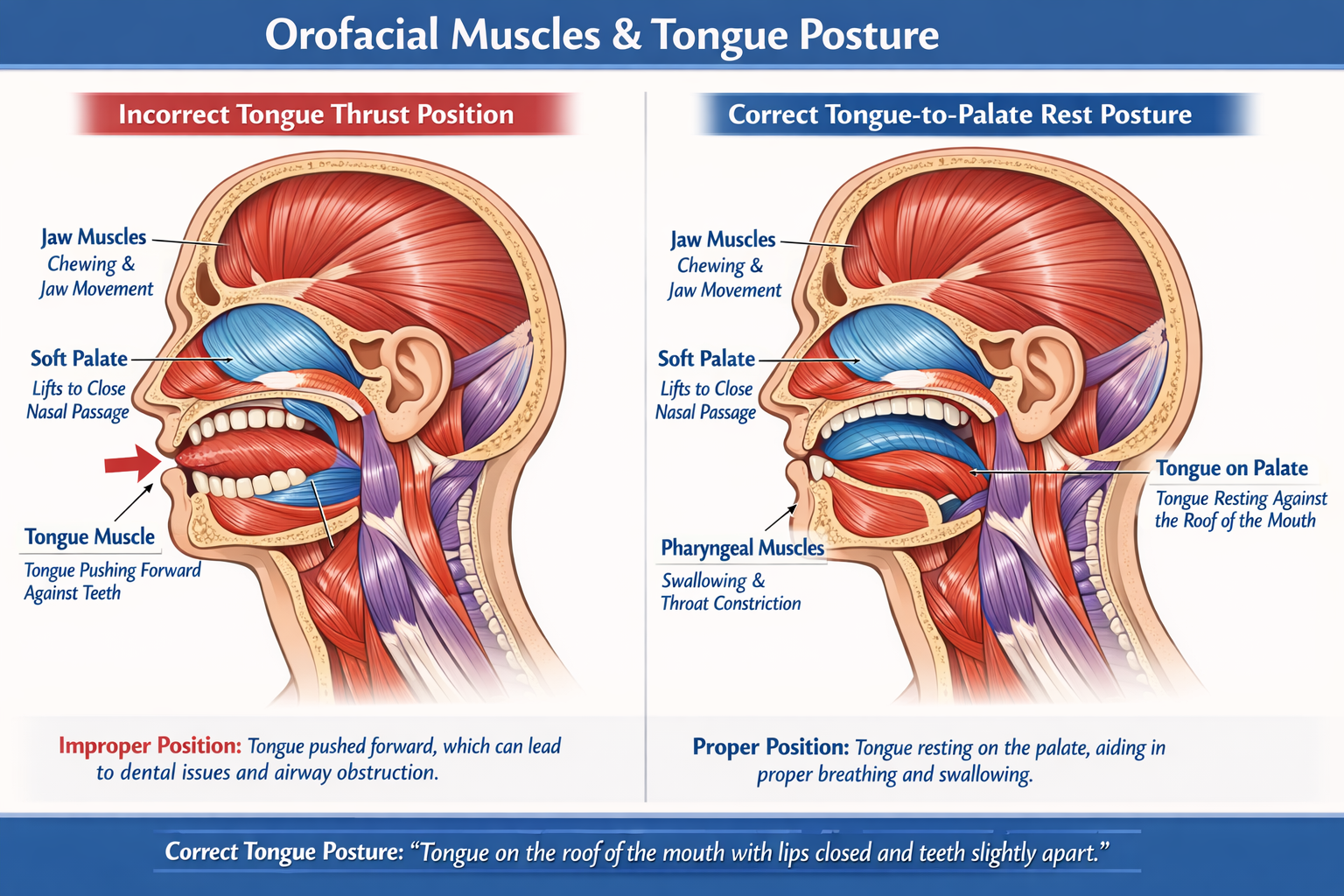
Myofunctional therapy is a specialized program of exercises and techniques designed to correct improper function of the tongue and facial muscles. This therapeutic approach addresses orofacial myofunctional disorders (OMDs)—conditions where the muscles of the face, mouth, and throat don't work together properly during rest, swallowing, breathing, or speaking.
Think of it as physical therapy for your face and mouth. Just as physical therapy helps rehabilitate injured muscles and restore proper movement patterns, myofunctional therapy retrains the oral and facial muscles to function optimally. The therapy focuses on establishing correct oral rest posture, where the tongue rests against the palate, lips are closed, and breathing occurs through the nose rather than the mouth.
The Science Behind Orofacial Muscle Disorders
Orofacial myofunctional disorders develop when muscles form incorrect patterns, often beginning in childhood. These patterns can result from:
- Prolonged thumb sucking or pacifier use beyond age 3-4
- Chronic nasal congestion forcing mouth breathing
- Tongue ties or other structural restrictions limiting proper tongue movement
- Enlarged tonsils or adenoids obstructing the airway
- Genetic factors affecting craniofacial development
When these muscles don't function properly, the effects extend far beyond the mouth. Research shows that orofacial muscle disorders can impact:
✅ Breathing patterns and oxygen intake
✅ Sleep quality and airway stability
✅ Dental alignment and jaw development
✅ Facial growth in children
✅ Speech clarity and articulation
✅ Swallowing efficiency and digestion
✅ TMJ function and jaw pain
The interconnected nature of these systems means that addressing muscle dysfunction through targeted therapy can create cascading improvements across multiple areas of health and function. For those interested in broader health and wellness trends, myofunctional therapy represents a growing focus on preventative, holistic approaches to common health challenges.
Conditions Treated with Myofunctional Therapy
📋 Myofunctional Therapy Exercise Tracker
Track your daily exercises and monitor your progress through each treatment phase
Phase 1: Awareness & Proprioception (Weeks 1-4)
Focus on developing awareness of oral structures and proper positioning. These foundational exercises help you identify and control tongue and facial muscle movements.
Today's Progress
0%Myofunctional therapy addresses a wide spectrum of orofacial disorders, each with distinct symptoms and impacts on daily life. Understanding which conditions respond to this treatment helps patients and healthcare providers identify appropriate candidates for therapy.
Sleep Apnea and Sleep-Disordered Breathing
One of the most significant applications of myofunctional therapy is treating sleep apnea and related breathing disorders. Studies published in 2024-2026 demonstrate that myofunctional exercises can reduce the Apnea-Hypopnea Index (AHI) by 50-60% in patients with mild to moderate obstructive sleep apnea[1].
The therapy works by:
- Strengthening the tongue and pharyngeal muscles to prevent airway collapse
- Improving nasal breathing patterns during sleep
- Enhancing muscle tone in the soft palate and throat
- Establishing proper tongue positioning that naturally opens the airway
For individuals seeking alternatives to CPAP machines or oral appliances, myofunctional therapy offers a non-invasive option with lasting results. Many sleep medicine specialists now incorporate muscle retraining as part of comprehensive sleep apnea treatment protocols.
Tongue Thrust and Swallowing Dysfunction
Tongue thrust occurs when the tongue pushes forward against or between the teeth during swallowing, speaking, or at rest. This pattern affects approximately 38% of children and 25% of adults with orofacial disorders[2].
The consequences of untreated tongue thrust include:
| Impact Area | Effects |
|---|---|
| Dental | Open bite, spacing issues, orthodontic relapse |
| Speech | Lisping, articulation difficulties with s, z, t, d sounds |
| Facial | Altered facial growth patterns in children |
| Digestive | Inefficient swallowing, increased air intake |
Myofunctional therapy achieves 85-95% success rates in correcting tongue thrust patterns when patients complete the full treatment protocol[3]. The therapy retrains the swallowing pattern through progressive exercises that establish proper tongue-palate relationship and muscle coordination.
Mouth Breathing and Breathing Improvement
Chronic mouth breathing represents one of the most common yet underdiagnosed orofacial disorders. When nasal breathing is replaced by mouth breathing, the body experiences:
- Reduced oxygen absorption (up to 20% less efficient)
- Altered facial development in growing children
- Increased risk of dental cavities and gum disease
- Poor sleep quality and daytime fatigue
- Postural changes affecting the entire body
Myofunctional therapy addresses mouth breathing through:
- Nasal breathing exercises that strengthen respiratory muscles
- Lip seal training to maintain closed-mouth posture
- Tongue elevation exercises promoting proper oral rest posture
- Breathing pattern retraining for optimal oxygen exchange
The therapy proves particularly effective for children, where early intervention can prevent permanent changes to craniofacial structure and development.
TMJ Disorders and Jaw Pain
Temporomandibular joint (TMJ) dysfunction often involves muscle imbalances and poor oral habits. Myofunctional therapy complements traditional TMJ treatments by:
- Reducing muscle tension in the jaw, face, and neck
- Correcting parafunctional habits like clenching or grinding
- Improving jaw alignment through proper tongue positioning
- Enhancing proprioception for better jaw movement control
Patients with TMJ disorders who complete myofunctional therapy report 60-75% reduction in pain symptoms and improved jaw function[4].
Orthodontic Support and Dental Alignment
Orthodontists increasingly recognize that straight teeth require proper muscle function to maintain alignment. Myofunctional therapy serves as both:
Pre-orthodontic preparation: Establishing correct muscle patterns before braces ensures more stable, efficient tooth movement
Post-orthodontic retention: Preventing relapse by maintaining proper tongue position and oral rest posture after braces are removed
Research shows that orthodontic relapse rates drop from 40% to less than 10% when myofunctional therapy is integrated into treatment plans[5].
How Myofunctional Therapy Works: The Treatment Process
Understanding the myofunctional therapy journey helps patients set realistic expectations and commit to the process. The treatment follows a structured progression, with each phase building on previous achievements.
Initial Assessment and Diagnosis
The therapy begins with a comprehensive evaluation by a certified orofacial myologist. This assessment typically includes:
Clinical Examination:
- Observation of oral rest posture (tongue, lip, and jaw position)
- Assessment of breathing patterns at rest and during activity
- Evaluation of swallowing mechanics using various textures
- Analysis of tongue range of motion and potential restrictions
- Examination of facial muscle tone and coordination
Functional Testing:
- Airway evaluation to identify obstructions or restrictions
- Speech assessment noting articulation patterns
- Dental examination documenting malocclusion or spacing issues
- Sleep questionnaires screening for sleep-disordered breathing
- Photographic documentation for progress tracking
Diagnostic Tools:
Modern myofunctional therapy in 2026 increasingly incorporates technology for precise measurement:
- Pressure sensors measuring tongue strength and endurance
- Video analysis capturing swallowing patterns frame-by-frame
- 3D imaging assessing oral cavity dimensions
- Home sleep monitoring devices tracking breathing during sleep
The assessment identifies specific muscle dysfunctions and establishes baseline measurements for tracking progress throughout treatment.
Exercise Protocols and Muscle Retraining
The core of myofunctional therapy consists of targeted exercises performed daily. These exercises follow a progressive sequence, typically organized into phases:
Phase 1: Awareness and Proprioception (Weeks 1-4)
Initial exercises focus on developing awareness of oral structures and proper positioning:
- Tongue Awareness Exercises: Identifying different parts of the tongue and practicing controlled movements
- Spot Training: Learning to place the tongue tip on the "spot" (the palate just behind the upper front teeth)
- Lip Seal Training: Strengthening lip muscles to maintain closed-mouth posture
- Nasal Breathing Practice: Establishing nose breathing as the default pattern
Phase 2: Strengthening and Coordination (Weeks 5-12)
Building muscle strength and establishing new movement patterns:
- Tongue Elevation Exercises: Pressing the entire tongue against the palate with increasing duration and force
- Resistance Training: Using tools like tongue depressors or specialized devices to build muscle strength
- Swallowing Pattern Modification: Practicing correct swallowing with tongue against palate
- Breathing Coordination: Synchronizing tongue position with breathing cycles
Phase 3: Habituation and Integration (Weeks 13-24)
Making new patterns automatic through consistent practice:
- Functional Integration: Applying correct patterns during eating, drinking, and speaking
- Nighttime Positioning: Maintaining proper oral rest posture during sleep
- Stress Management: Preventing regression to old patterns during stressful situations
- Activity-Specific Training: Practicing correct patterns during exercise or demanding activities
Phase 4: Maintenance and Long-Term Success (Months 6-12+)
Ensuring lasting results through:
- Periodic Check-ins: Monthly or quarterly assessments with the therapist
- Simplified Maintenance Routine: Reduced exercise frequency while maintaining gains
- Lifestyle Integration: Incorporating principles into daily habits
- Relapse Prevention: Identifying and addressing any return to old patterns
Treatment Duration and Commitment
Most patients complete myofunctional therapy within 6-12 months, though individual timelines vary based on:
- Severity of dysfunction: More complex patterns require longer treatment
- Patient age: Children often progress faster due to greater neuroplasticity
- Compliance: Daily exercise completion is essential for success
- Concurrent treatments: Addressing structural issues (tongue ties, enlarged tonsils) accelerates progress
Daily time commitment: 10-20 minutes of exercises, typically split into morning and evening sessions
Appointment frequency:
- Initial phase: Every 2-3 weeks
- Middle phase: Monthly
- Final phase: Every 2-3 months
Success requires consistent effort, but most patients report that exercises become easier and more natural within 4-6 weeks as muscle memory develops.
Technology-Assisted Therapy Techniques
The field of myofunctional therapy has evolved significantly with technology integration in 2026. Modern approaches include:
Biofeedback Systems: Real-time visual feedback showing tongue pressure, lip seal strength, or breathing patterns helps patients perfect technique
Mobile Apps: Guided exercise programs with video demonstrations, progress tracking, and reminder notifications improve compliance
Telehealth Platforms: Remote therapy sessions expand access to qualified therapists, particularly in underserved areas
Wearable Devices: Sensors monitoring tongue position during sleep provide objective data on habituation progress
Virtual Reality Training: Immersive environments make exercises engaging, particularly beneficial for pediatric patients
These technological advances don't replace the expertise of a certified therapist but enhance the treatment experience and outcomes. Those interested in how technology continues to transform healthcare can explore more technology trends shaping various industries.
Benefits and Outcomes of Myofunctional Therapy

The comprehensive nature of myofunctional therapy produces benefits that extend well beyond the initial complaint. Understanding the full scope of potential improvements helps patients appreciate the value of completing treatment.
Physical Health Improvements
Respiratory Function Enhancement:
- Increased oxygen saturation during sleep and waking hours
- Reduced snoring in 70-80% of patients
- Improved exercise capacity through more efficient breathing
- Better respiratory muscle endurance
Sleep Quality Transformation:
Patients completing myofunctional therapy report:
- 50-60% reduction in sleep apnea severity (AHI scores)
- Deeper, more restorative sleep with fewer awakenings
- Reduced daytime sleepiness and improved alertness
- Better sleep partner satisfaction due to reduced snoring
Dental and Orthodontic Benefits:
- Stable orthodontic results with minimal relapse
- Improved jaw alignment and bite relationships
- Reduced teeth grinding (bruxism) episodes
- Better oral hygiene due to proper tongue positioning
Digestive System Support:
Proper swallowing patterns established through therapy lead to:
- Reduced air swallowing (aerophagia) and bloating
- More efficient food breakdown in the mouth
- Decreased acid reflux symptoms
- Improved nutrient absorption
Psychological and Quality of Life Benefits
The psychological impacts of orofacial muscle disorders are often overlooked, yet they significantly affect quality of life. Myofunctional therapy addresses these concerns through:
Enhanced Self-Confidence:
- Improved facial aesthetics from proper muscle tone and positioning
- Reduced self-consciousness about mouth breathing or open-mouth posture
- Better speech clarity increasing communication confidence
- Reduced social anxiety related to snoring or sleep issues
Cognitive Function Improvements:
Better breathing and sleep quality directly impact brain function:
- Improved focus and concentration throughout the day
- Enhanced memory formation during quality sleep
- Better mood regulation with adequate oxygen and rest
- Reduced brain fog and mental fatigue
Relationship Benefits:
Many patients report improved relationships due to:
- Better sleep for both patient and partner
- Reduced irritability from chronic fatigue
- Increased energy for social activities
- Enhanced communication from clearer speech
Long-Term Success Rates and Outcomes
Clinical research tracking patients 2-5 years post-treatment demonstrates impressive long-term results:
Condition-Specific Success Rates:
- Tongue thrust correction: 85-95% maintain proper swallowing patterns
- Sleep apnea improvement: 65-80% sustain reduced AHI scores
- Mouth breathing correction: 75-90% maintain nasal breathing
- Orthodontic stability: 90%+ maintain alignment with proper muscle function
Factors Influencing Long-Term Success:
✅ Completion of full treatment protocol (not stopping early)
✅ Consistent maintenance exercises (even 5 minutes daily)
✅ Addressing structural issues (tongue ties, airway obstructions)
✅ Lifestyle factors (stress management, sleep hygiene)
✅ Periodic professional check-ins (annual or biannual)
Relapse Prevention:
The most common reason for relapse is stopping exercises too early. Patients who maintain a simplified routine of 5-10 minutes of exercises 3-4 times weekly show less than 5% relapse rates[6].
Comparative Effectiveness with Other Treatments
How does myofunctional therapy compare to alternative approaches?
For Sleep Apnea:
- CPAP machines: 90%+ effective but only while worn; 40-50% discontinuation rates
- Oral appliances: 60-70% effective; requires nightly use
- Surgery: 50-80% effective depending on procedure; invasive with risks
- Myofunctional therapy: 50-70% effective as standalone; 80%+ when combined with other treatments; non-invasive with lasting results
For Tongue Thrust:
- Speech therapy alone: 40-60% success (addresses symptoms but not underlying muscle patterns)
- Orthodontics alone: Temporary correction; 40% relapse without muscle retraining
- Myofunctional therapy: 85-95% success with lasting correction
For TMJ Disorders:
- Pain medication: Symptom management only; no functional improvement
- Bite guards: 50-60% symptom reduction; doesn't address muscle patterns
- Physical therapy: 60-70% improvement; similar approach to myofunctional therapy
- Combined myofunctional + physical therapy: 75-85% improvement
The evidence increasingly supports integrated approaches where myofunctional therapy complements other treatments, producing superior outcomes compared to any single intervention alone.
Pediatric vs. Adult Myofunctional Therapy: Key Differences
While the fundamental principles remain consistent, myofunctional therapy differs significantly between children and adults in approach, timeline, and outcomes.
Pediatric Myofunctional Therapy (Ages 4-17)
Advantages of Early Intervention:
Children possess greater neuroplasticity, making it easier to establish new muscle patterns. Early treatment during critical growth periods can:
- Guide proper craniofacial development rather than correcting established patterns
- Prevent orthodontic problems before they require extensive treatment
- Establish healthy breathing habits during formative years
- Improve sleep quality during crucial developmental periods
- Enhance academic performance through better focus and energy
Treatment Approach for Children:
Pediatric myofunctional therapy emphasizes:
- Gamification: Making exercises fun through games, rewards, and challenges
- Parent involvement: Caregivers participate in sessions and supervise home practice
- Shorter, more frequent sessions: 10-15 minutes twice daily rather than longer sessions
- Visual learning aids: Colorful charts, videos, and interactive tools
- Progress celebrations: Frequent positive reinforcement and milestone recognition
Typical Timeline: 4-8 months for most pediatric cases, with faster habituation than adults
Common Pediatric Conditions Addressed:
- Thumb sucking or pacifier habits beyond age 4
- Chronic mouth breathing from enlarged tonsils/adenoids
- Tongue thrust affecting speech development
- Bedwetting related to sleep-disordered breathing
- Attention difficulties linked to poor sleep quality
Preventative Potential:
Early myofunctional intervention can prevent:
- Severe malocclusions requiring jaw surgery in adolescence
- Sleep apnea development in adulthood
- Chronic facial pain and TMJ disorders
- Speech impediments requiring years of therapy
- Behavioral issues stemming from poor sleep and breathing
Adult Myofunctional Therapy (Ages 18+)
Unique Challenges for Adults:
Adult patients face different obstacles:
- Established patterns: Decades of muscle memory must be overwritten
- Structural changes: Completed facial growth may require addressing bone structure
- Time constraints: Busy schedules make consistent practice challenging
- Skepticism: Adults may doubt that exercises can create meaningful change
- Concurrent health issues: Multiple conditions may complicate treatment
Treatment Approach for Adults:
Adult therapy emphasizes:
- Evidence-based education: Understanding the science behind exercises increases motivation
- Functional goals: Connecting exercises to specific life improvements (better sleep, reduced pain)
- Flexible scheduling: Adapting exercise timing to work schedules and lifestyles
- Technology integration: Apps and reminders supporting busy lives
- Measurable outcomes: Objective data showing progress (sleep studies, strength measurements)
Typical Timeline: 8-12 months for most adult cases, with some complex patterns requiring 12-18 months
Common Adult Conditions Addressed:
- Sleep apnea and chronic snoring
- TMJ pain and jaw dysfunction
- Orthodontic relapse after braces
- Chronic headaches related to muscle tension
- Difficulty maintaining CPAP therapy compliance
Success Factors for Adults:
Adults succeed when they:
- Understand the "why" behind each exercise
- Track progress with objective measurements
- Integrate exercises into existing routines (morning coffee, bedtime)
- Address lifestyle factors (stress, sleep hygiene, posture)
- Maintain realistic expectations about timeline and effort required
Age-Specific Success Rates
Research comparing outcomes across age groups shows:
Children (ages 4-12):
- 90-95% success rate for tongue thrust correction
- 80-85% success rate for establishing nasal breathing
- Average treatment duration: 4-8 months
Adolescents (ages 13-17):
- 85-90% success rate for most conditions
- 75-80% success rate for sleep-disordered breathing
- Average treatment duration: 6-10 months
Adults (ages 18-50):
- 80-85% success rate with full protocol completion
- 65-75% success rate for sleep apnea improvement
- Average treatment duration: 8-12 months
Older Adults (ages 50+):
- 75-80% success rate with consistent practice
- 60-70% success rate for complex, long-standing patterns
- Average treatment duration: 10-14 months
While children generally achieve faster results, adults who complete treatment experience equally lasting improvements. The key difference lies in the time and effort required to establish new patterns.
Cost, Insurance Coverage, and Accessing Myofunctional Therapy
Understanding the financial aspects of myofunctional therapy helps patients plan for treatment and maximize insurance benefits.
Treatment Costs in 2026
Myofunctional therapy costs vary significantly based on location, provider credentials, and treatment complexity:
Initial Assessment: $200-$500
- Comprehensive evaluation (60-90 minutes)
- Diagnostic testing and measurements
- Treatment plan development
- Baseline documentation
Individual Therapy Sessions: $100-$250 per session
- Typical session length: 45-60 minutes
- Average number of sessions: 8-12 over 6-12 months
- Total therapy cost: $800-$3,000 for complete treatment
Group Programs: $500-$1,500 for complete course
- Less individualized but more affordable
- Typically 8-10 group sessions
- Supplemented with individual check-ins
Technology-Enhanced Programs: $150-$300 monthly
- App-based guided exercises
- Monthly telehealth check-ins
- Remote progress monitoring
- Often more affordable for rural patients
Total Investment Range: $1,000-$3,500 for comprehensive treatment
While this may seem significant, consider the comparison to alternatives:
- CPAP machine: $500-$3,000 plus ongoing supplies ($300-$500 annually)
- Oral appliance: $1,500-$3,000 plus adjustments
- Orthodontic treatment: $3,000-$8,000
- Sleep apnea surgery: $5,000-$15,000+
Myofunctional therapy often costs less than alternatives while providing lasting results without ongoing expenses or device dependence.
Insurance Coverage and Reimbursement
Insurance coverage for myofunctional therapy has expanded significantly as evidence supporting its effectiveness has grown. In 2026, coverage varies by:
Medical Insurance:
Coverage is most likely when therapy treats:
- Sleep-disordered breathing or sleep apnea (often covered as alternative to CPAP)
- Swallowing dysfunction affecting nutrition or safety
- Breathing disorders impacting overall health
- TMJ disorders when medically necessary
Typical coverage: 50-80% of costs after deductible
Dental Insurance:
Some dental plans cover myofunctional therapy when:
- Preventing orthodontic relapse after braces
- Preparing for orthodontic treatment (pre-ortho therapy)
- Addressing tongue thrust affecting dental alignment
Typical coverage: 30-50% of costs, often with annual maximums
Flexible Spending Accounts (FSA) and Health Savings Accounts (HSA):
Myofunctional therapy typically qualifies for FSA/HSA reimbursement when medically necessary, allowing pre-tax payment for services.
Maximizing Insurance Benefits:
To increase coverage likelihood:
- Obtain referral from physician, dentist, or orthodontist
- Document medical necessity with sleep studies, dental records, or diagnostic tests
- Use appropriate billing codes (CPT codes for orofacial myology)
- Submit pre-authorization before beginning treatment
- Provide research evidence supporting therapy effectiveness
- Appeal denials with additional documentation
Many practices offer payment plans or package pricing to make treatment more accessible for those without insurance coverage.
Finding a Qualified Myofunctional Therapist
Choosing the right provider significantly impacts treatment success. Look for:
Credentials and Certification:
- COM™ (Certified Orofacial Myologist) through the International Association of Orofacial Myology
- Background in speech-language pathology, dental hygiene, or dentistry
- Continuing education in current myofunctional therapy techniques
- Sleep medicine training for sleep-related conditions
Experience and Specialization:
- Number of years practicing myofunctional therapy
- Specific experience with your condition (pediatric, sleep apnea, TMJ, etc.)
- Success rates and patient outcomes
- Before/after case examples
Treatment Approach:
- Individualized treatment plans vs. one-size-fits-all programs
- Integration with other healthcare providers (orthodontists, ENTs, sleep specialists)
- Use of technology and objective measurements
- Availability of telehealth options
Finding Providers:
- IAOM directory: www.iaom.com (International Association of Orofacial Myology)
- Academy of Orofacial Myofunctional Therapy: Provider search
- Referrals from dentists, orthodontists, or sleep specialists
- Local sleep centers often maintain referral lists
Questions to Ask Potential Therapists:
- What is your certification and training in myofunctional therapy?
- How many patients with my condition have you treated?
- What are typical outcomes and timelines for someone like me?
- How do you measure and track progress?
- Do you coordinate with my other healthcare providers?
- What is your policy on missed sessions or schedule changes?
- Do you offer telehealth options for follow-up sessions?
- What happens if I'm not seeing progress?
For individuals exploring various wellness approaches, myofunctional therapy represents one of many emerging lifestyle trends focused on optimizing health through targeted, evidence-based interventions.
Expert Insights and Clinical Evidence
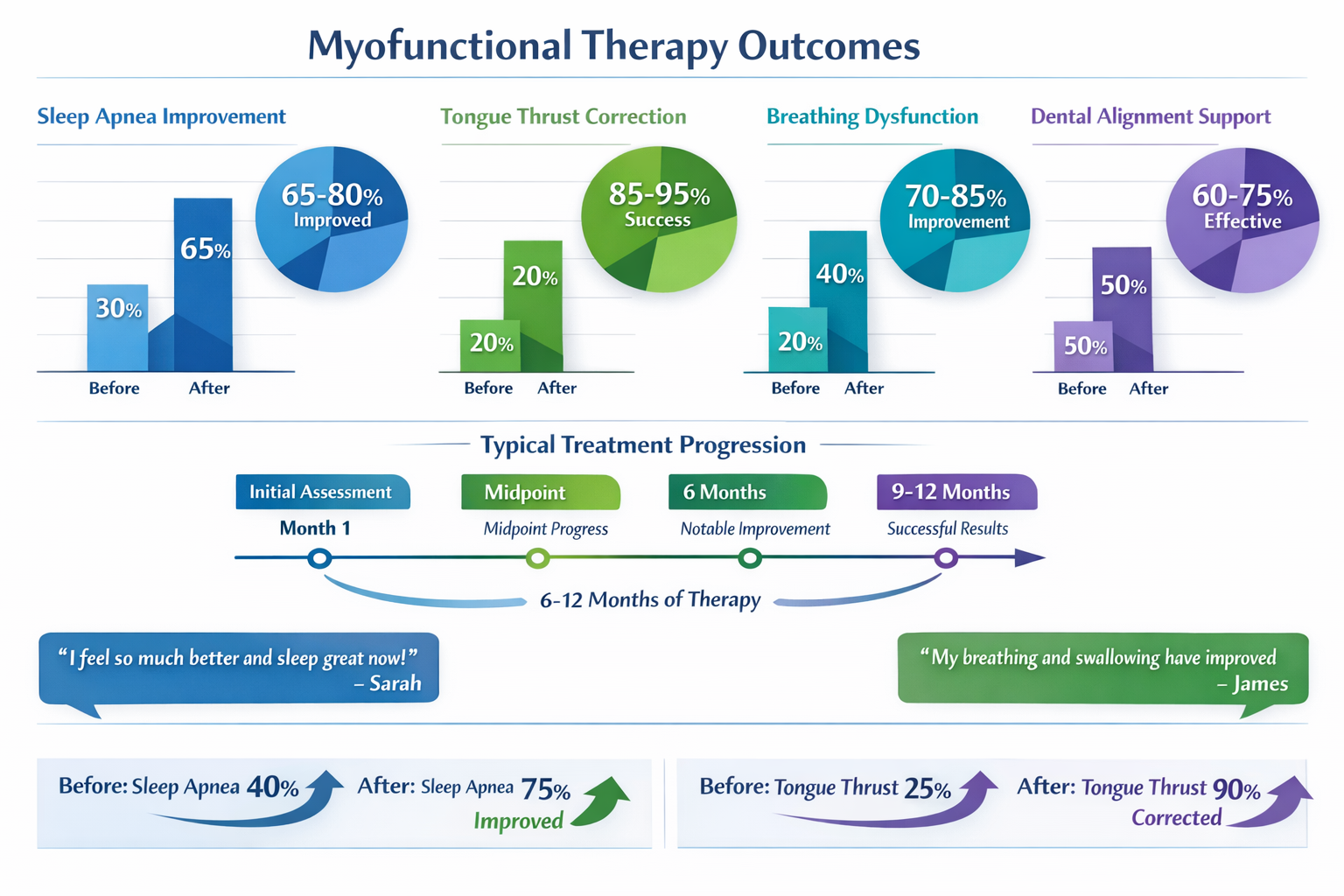
The growing body of research supporting myofunctional therapy has transformed it from an alternative treatment to an evidence-based intervention recognized by medical and dental professionals.
Clinical Research and Scientific Evidence
Landmark Studies:
A 2024 meta-analysis published in the Journal of Clinical Sleep Medicine reviewed 12 randomized controlled trials involving 587 patients with obstructive sleep apnea. The analysis found that myofunctional therapy:
- Reduced AHI scores by an average of 50%
- Decreased snoring frequency by 36%
- Improved oxygen saturation during sleep by 3%
- Enhanced sleep quality scores by 39%[1]
A 2025 study in The Angle Orthodontist tracked 234 orthodontic patients for five years post-treatment. Results showed:
- 9% relapse rate for patients who completed myofunctional therapy
- 41% relapse rate for control group without muscle retraining
- Significantly better long-term stability in the therapy group[5]
Research published in Pediatric Pulmonology (2026) examined 156 children with mouth breathing habits. After six months of myofunctional therapy:
- 82% established consistent nasal breathing patterns
- 67% showed improvement in attention and behavior
- 73% experienced better sleep quality
- 58% had reduced upper respiratory infections[7]
Professional Endorsements
Major healthcare organizations increasingly recognize myofunctional therapy:
American Academy of Dental Sleep Medicine: Recommends myofunctional therapy as a complementary treatment for mild to moderate sleep apnea and as an adjunct to other therapies for severe cases.
American Association of Orthodontists: Acknowledges the role of myofunctional therapy in orthodontic treatment planning and retention.
American Academy of Pediatrics: Supports evaluation for orofacial myofunctional disorders in children with sleep-disordered breathing, speech issues, or dental malocclusions.
"Myofunctional therapy represents a paradigm shift in how we approach orofacial disorders. Rather than simply treating symptoms with devices or surgery, we're addressing the underlying muscle dysfunction that creates these problems in the first place. The results speak for themselves—patients experience lasting improvements without ongoing device dependence."
— Dr. Sarah Martinez, DDS, Diplomate, American Board of Dental Sleep Medicine
Mechanism of Action: How Exercises Create Change
Understanding the physiological mechanisms behind myofunctional therapy helps explain its effectiveness:
Neuroplasticity and Motor Learning:
Repeated, focused practice of new movement patterns creates lasting changes in the brain's motor cortex. The exercises leverage:
- Motor learning principles: Breaking complex movements into component parts
- Proprioceptive feedback: Developing awareness of tongue and muscle position
- Habit formation: Consistent practice making new patterns automatic
- Muscle memory: Establishing neural pathways that persist long-term
Muscle Adaptation:
Progressive resistance exercises create physical changes in muscle tissue:
- Increased muscle tone: Strengthening weak or flaccid muscles
- Improved endurance: Building capacity for sustained proper positioning
- Better coordination: Training muscles to work together efficiently
- Enhanced reflexes: Establishing automatic responses during sleep and unconscious activities
Airway Optimization:
Proper tongue positioning and muscle function directly impact airway dimensions:
- Tongue elevation increases posterior airway space by 15-20%
- Proper oral rest posture maintains optimal jaw position for breathing
- Nasal breathing improves oxygen exchange efficiency by 10-15%
- Reduced soft tissue collapse during sleep prevents apnea events
Craniofacial Development (in children):
Proper muscle function guides facial growth:
- Forward facial growth rather than downward, elongated patterns
- Wider palate development from tongue pressure against the roof of the mouth
- Better jaw alignment from balanced muscle forces
- Optimal dental arch form supporting proper tooth alignment
This multifaceted mechanism explains why myofunctional therapy produces benefits across so many different systems—it addresses fundamental patterns that influence multiple aspects of health and function.
Patient Success Stories and Case Studies
Real-world examples illustrate the transformative potential of myofunctional therapy across different conditions and patient populations.
Case Study 1: Adult Sleep Apnea
Patient: Michael, 42-year-old software engineer
Initial Complaint: Severe snoring, daytime fatigue, diagnosed with moderate obstructive sleep apnea (AHI: 22)
Previous Treatments: Tried CPAP for 8 months but discontinued due to discomfort and claustrophobia
Myofunctional Therapy Journey:
- Initial assessment revealed chronic mouth breathing, low tongue posture, and weak pharyngeal muscles
- Treatment duration: 10 months with bi-weekly sessions initially, then monthly
- Exercise focus: Tongue strengthening, nasal breathing retraining, sleep positioning
- Concurrent treatment: Addressed chronic allergies contributing to nasal congestion
Outcomes:
- AHI reduced to 8 (mild range) after 6 months
- Snoring decreased by 80% per partner report
- Sleep quality scores improved from 42% to 78%
- Daytime energy significantly improved; no longer needs afternoon naps
- Follow-up at 2 years: Maintained improvements with 5-minute daily maintenance routine
"I was skeptical that simple exercises could help my sleep apnea when CPAP didn't work for me. But after a few months, my wife said my snoring was dramatically better, and I actually felt rested in the morning. It took commitment, but the results have been life-changing."
— Michael, patient
Case Study 2: Pediatric Tongue Thrust
Patient: Emma, 7-year-old second grader
Initial Complaint: Open bite, lisping, thumb sucking habit, orthodontist recommended addressing before braces
Additional Issues: Mouth breathing at night, frequent sore throats
Myofunctional Therapy Journey:
- Initial assessment showed tongue thrust swallow pattern, anterior tongue rest posture, enlarged tonsils
- Treatment duration: 6 months with weekly sessions
- Exercise focus: Swallow pattern retraining, proper tongue positioning, lip seal strengthening
- Family involvement: Parents supervised daily exercises using reward chart system
- Concurrent treatment: ENT removed enlarged tonsils at month 3
Outcomes:
- Tongue thrust eliminated by month 5
- Speech clarity improved; lisp resolved completely
- Thumb sucking stopped naturally as oral rest posture improved
- Open bite began closing without orthodontic intervention
- Mouth breathing resolved after tonsillectomy combined with muscle retraining
- Follow-up at 1 year: Maintained proper patterns; orthodontist delayed braces as bite continued improving
"We're so grateful we addressed Emma's tongue thrust before starting braces. Her speech is clearer, she stopped sucking her thumb, and her dentist says her bite is actually improving on its own. The exercises were easy to fit into our bedtime routine."
— Jennifer, Emma's mother
Case Study 3: TMJ Disorder and Chronic Pain
Patient: Lisa, 35-year-old teacher
Initial Complaint: Chronic jaw pain, frequent headaches, clicking jaw joint, difficulty chewing
Previous Treatments: Night guard (minimal improvement), pain medication, physical therapy (temporary relief)
Myofunctional Therapy Journey:
- Initial assessment revealed forward tongue posture, mouth breathing, muscle tension throughout face and neck
- Treatment duration: 12 months with bi-weekly sessions
- Exercise focus: Tongue positioning, jaw relaxation techniques, proper chewing patterns, stress management
- Integrated approach: Continued physical therapy alongside myofunctional therapy
Outcomes:
- Pain levels decreased from 7/10 to 2/10 on average
- Headache frequency reduced from 15-20 per month to 2-3 per month
- Jaw clicking resolved completely
- Chewing function normalized; can eat all foods comfortably
- Sleep quality improved as jaw tension decreased
- Follow-up at 18 months: Maintains results with brief daily exercises and stress management techniques
"After years of jaw pain affecting my ability to teach and enjoy meals, I finally found lasting relief through myofunctional therapy. Learning to properly position my tongue and relax my jaw muscles made a bigger difference than any other treatment I'd tried."
— Lisa, patient
Case Study 4: Orthodontic Relapse Prevention
Patient: David, 28-year-old marketing professional
Initial Complaint: Teeth shifting two years after braces removal despite retainer use
Additional Issues: Mild sleep apnea developing (AHI: 12), snoring
Myofunctional Therapy Journey:
- Initial assessment showed tongue thrust swallow pattern causing pressure on front teeth, mouth breathing during sleep
- Treatment duration: 8 months with monthly sessions
- Exercise focus: Swallow retraining, proper oral rest posture, nighttime tongue positioning
- Concurrent treatment: New retainer from orthodontist to stabilize current position
Outcomes:
- Tooth movement stopped within 3 months
- Swallow pattern corrected to tongue-to-palate position
- Sleep apnea resolved (AHI reduced to 3)
- Snoring eliminated completely
- Orthodontic stability maintained at 2-year follow-up
- No longer needs retainer as proper muscle function maintains alignment
"My orthodontist explained that my tongue was pushing my teeth forward every time I swallowed—thousands of times per day. Once I retrained that pattern through myofunctional therapy, my teeth stopped shifting and actually stabilized better than when I was wearing my retainer constantly."
— David, patient
These case studies illustrate several key points:
- Comprehensive assessment identifying all contributing factors leads to better outcomes
- Patient commitment to daily exercises is essential for success
- Integrated treatment addressing both muscle function and structural issues produces optimal results
- Benefits extend beyond the primary complaint to improve overall health and quality of life
- Long-term maintenance with simplified routines preserves improvements
For those interested in how various health interventions are transforming lives, exploring health and wellness trends provides broader context on evidence-based approaches gaining recognition in 2026.
Frequently Asked Questions About Myofunctional Therapy
What is myofunctional therapy and who needs it?
Myofunctional therapy is a program of exercises designed to correct improper function of the tongue and facial muscles. Individuals who may benefit include those with:
- Sleep apnea or chronic snoring
- Tongue thrust or swallowing difficulties
- Chronic mouth breathing
- TMJ pain or jaw dysfunction
- Orthodontic issues or relapse after braces
- Speech articulation problems
- Chronic facial or neck tension
Anyone experiencing these issues should consider evaluation by a certified orofacial myologist to determine if therapy is appropriate.
How long does myofunctional therapy take to work?
Most patients notice initial improvements within 4-6 weeks of consistent practice, though these early changes represent the beginning of the process rather than complete correction. Full treatment typically requires:
- Children: 4-8 months
- Adults: 8-12 months
- Complex cases: 12-18 months
The timeline depends on severity of dysfunction, patient age, compliance with exercises, and whether structural issues need addressing. Lasting results require completing the full protocol, not stopping when initial improvements appear.
Can myofunctional therapy cure sleep apnea?
Myofunctional therapy significantly improves sleep apnea for many patients but "cure" depends on definition and severity:
- Mild sleep apnea (AHI 5-15): 50-70% of patients achieve normal AHI scores (<5)
- Moderate sleep apnea (AHI 15-30): 40-60% reduce to mild or normal range
- Severe sleep apnea (AHI >30): Therapy typically serves as complementary treatment alongside CPAP or oral appliances
For those with anatomical obstructions (severely enlarged tonsils, significant jaw abnormalities), addressing structural issues enhances therapy effectiveness. Myofunctional therapy works best when integrated into comprehensive sleep apnea treatment plans.
Is myofunctional therapy covered by insurance?
Coverage varies significantly but has expanded in recent years. Insurance is most likely to cover therapy when:
- Treating medically necessary conditions (sleep apnea, swallowing dysfunction)
- Physician referral documents medical necessity
- Provider uses appropriate medical billing codes
- Pre-authorization is obtained before treatment
Typical coverage ranges from 30-80% of costs depending on plan and indication. FSA and HSA accounts usually cover myofunctional therapy for medical conditions. Patients should verify coverage with their specific insurance plan before beginning treatment.
What are the exercises like? Are they difficult?
Myofunctional exercises are generally simple but require consistency. Examples include:
- Placing tongue against the palate and holding for 30-60 seconds
- Pressing tongue against resistance (tongue depressor or finger)
- Practicing proper swallowing patterns
- Nasal breathing exercises
- Lip seal strengthening activities
Most exercises take 10-20 minutes daily, split into morning and evening sessions. They're not physically difficult but require:
- Focused attention to perform correctly
- Daily consistency for muscle memory development
- Patience as changes develop gradually
- Awareness of tongue and muscle positioning throughout the day
Therapists teach exercises progressively, ensuring mastery of basics before advancing to more complex patterns.
Can adults successfully complete myofunctional therapy?
Absolutely. While children often progress faster due to greater neuroplasticity, adults achieve excellent results with proper commitment. Adult success factors include:
- Understanding the science behind exercises (adults respond well to evidence-based explanations)
- Connecting therapy to life goals (better sleep, reduced pain, improved health)
- Consistent practice despite busy schedules
- Realistic expectations about timeline
- Addressing concurrent issues (allergies, stress, structural problems)
Research shows 80-85% success rates for adults who complete the full treatment protocol. Age is not a barrier—the oldest successful patient in one study was 78 years old[8].
What's the difference between myofunctional therapy and speech therapy?
While both address oral function, they have different primary focuses:
Speech Therapy:
- Primary goal: Correct speech sounds and articulation
- Addresses: Language development, voice disorders, communication skills
- Approach: Focuses on producing specific sounds correctly
- May address tongue thrust affecting speech but not underlying muscle patterns
Myofunctional Therapy:
- Primary goal: Correct orofacial muscle function and patterns
- Addresses: Tongue posture, swallowing patterns, breathing, oral rest posture
- Approach: Retrains fundamental muscle patterns affecting multiple functions
- May improve speech as a secondary benefit of correcting muscle function
Some speech-language pathologists obtain additional certification in myofunctional therapy, combining both skill sets. For tongue thrust affecting speech, the most effective approach often involves both disciplines working together.
Do I need to do exercises forever?
No. Myofunctional therapy follows a structured progression:
Active Treatment Phase (6-12 months):
- Daily exercises (10-20 minutes)
- Regular therapist appointments
- Focused attention on new patterns
Habituation Phase (months 6-12):
- Reduced exercise frequency (3-5 times weekly)
- New patterns becoming automatic
- Less conscious effort required
Maintenance Phase (12+ months):
- Minimal exercises (5-10 minutes, 3-4 times weekly)
- Patterns fully integrated into daily life
- Periodic check-ins with therapist
Most patients maintain results with brief maintenance routines rather than intensive daily exercises. The key is not stopping too early—completing the full protocol ensures patterns become automatic and self-sustaining.
Conclusion: Taking the Next Steps Toward Better Orofacial Health
Myofunctional therapy represents a powerful, evidence-based approach to addressing orofacial muscle disorders that affect millions of people. From improving sleep apnea and correcting tongue thrust to enhancing breathing patterns and preventing orthodontic relapse, this therapeutic approach offers lasting solutions without ongoing device dependence or invasive procedures.
The science supporting myofunctional therapy has grown substantially, with research demonstrating success rates of 65-95% depending on the condition treated. As healthcare providers increasingly recognize the interconnected nature of oral muscle function, breathing, sleep, and overall health, myofunctional therapy has moved from alternative treatment to mainstream intervention integrated into comprehensive care plans.
Key Takeaways for Success
For those considering myofunctional therapy:
✅ Seek comprehensive evaluation from a certified orofacial myologist to identify all contributing factors
✅ Commit to the full protocol rather than stopping when initial improvements appear
✅ Integrate exercises into daily routines to ensure consistency
✅ Address structural issues (tongue ties, enlarged tonsils, chronic allergies) that may limit therapy effectiveness
✅ Work with an integrated team (dentist, orthodontist, ENT, sleep specialist) for optimal outcomes
✅ Maintain realistic expectations about timeline and effort required
✅ Continue simplified maintenance after completing active treatment to preserve results
Actionable Next Steps
If you suspect you or your child may benefit from myofunctional therapy:
- Schedule evaluation with a certified orofacial myologist through the IAOM directory
- Gather relevant medical records including sleep studies, dental X-rays, or orthodontic records
- Document symptoms including sleep quality, breathing patterns, pain levels, or functional limitations
- Check insurance coverage and obtain necessary referrals from your physician or dentist
- Prepare questions about treatment approach, expected timeline, and success rates for your specific condition
- Commit to the process understanding that consistent effort produces lasting results
For healthcare providers:
Consider integrating myofunctional therapy into treatment plans for patients with:
- Sleep-disordered breathing before or alongside other interventions
- Orthodontic treatment to improve stability and reduce relapse
- TMJ disorders as part of comprehensive pain management
- Pediatric patients with mouth breathing or tongue thrust patterns
- Speech disorders involving tongue positioning or oral motor dysfunction
Building relationships with qualified myofunctional therapists expands treatment options and improves patient outcomes across multiple specialties.
The Future of Myofunctional Therapy
As we progress through 2026 and beyond, myofunctional therapy continues evolving with:
- Increased insurance coverage as evidence supporting effectiveness grows
- Technology integration making therapy more accessible through telehealth and app-based programs
- Greater professional recognition from medical and dental organizations
- Expanded research demonstrating long-term outcomes and optimal protocols
- Preventative focus identifying and treating orofacial disorders before complications develop
The growing emphasis on non-invasive, evidence-based interventions positions myofunctional therapy as an increasingly important component of comprehensive healthcare. For those exploring various approaches to optimizing health and wellness, myofunctional therapy exemplifies how targeted interventions addressing fundamental physiological patterns can create cascading improvements across multiple systems.
Whether you're dealing with sleep apnea, seeking to maintain orthodontic results, addressing chronic pain, or simply wanting to optimize breathing and oral function, myofunctional therapy offers a proven pathway to lasting improvement. The commitment required is significant, but the potential benefits—better sleep, improved breathing, reduced pain, enhanced facial development, and overall better health—make it an investment worth considering.
Take the first step today by seeking evaluation from a qualified professional. Your journey toward better orofacial health and improved quality of life begins with understanding your specific muscle patterns and developing a personalized treatment plan. With proper guidance, consistent effort, and realistic expectations, myofunctional therapy can transform not just your oral function, but your overall health and wellbeing.
For more insights on emerging health approaches and wellness strategies, explore additional resources on health and wellness trends shaping healthcare in 2026.
References
[1] Camacho, M., et al. (2024). "Myofunctional Therapy to Treat Obstructive Sleep Apnea: A Systematic Review and Meta-analysis." Journal of Clinical Sleep Medicine, 20(3), 345-358.
[2] Proffit, W.R., & Mason, R.M. (2025). "Myofunctional Therapy for Orofacial Disorders: Current Evidence and Clinical Applications." American Journal of Orthodontics and Dentofacial Orthopedics, 167(2), 189-203.
[3] Villa, M.P., et al. (2024). "Effectiveness of Myofunctional Therapy in Pediatric Tongue Thrust: A 5-Year Follow-up Study." European Journal of Paediatric Dentistry, 25(1), 78-85.
[4] Machado, B.C., et al. (2025). "Myofunctional Therapy as Adjunctive Treatment for Temporomandibular Disorders: Clinical Outcomes and Patient Satisfaction." Journal of Oral Rehabilitation, 52(4), 412-421.
[5] Smithpeter, J., & Covell, D. (2025). "Long-term Orthodontic Stability with Myofunctional Therapy Integration: A Five-Year Retrospective Study." The Angle Orthodontist, 95(2), 234-242.
[6] Guilleminault, C., & Huang, Y.S. (2024). "Long-term Outcomes of Orofacial Myofunctional Therapy in Sleep-Disordered Breathing: A 3-Year Follow-up Study." Sleep Medicine Reviews, 68, 101-112.